
Responsible Outdoors
Clean Outdoor Gear Between Destinations
Inspect and clean boots, tents, and other gear where official local guidance identifies invasive-species risks.
On this page
Find the local biosecurity instructions
Invasive species can move between places on footwear, clothing, tents, boats, and other equipment. The risk and recommended cleaning method vary by region and species. Check the park, agricultural, conservation, or biosecurity authority for the route and for the places where you have recently traveled. Some regions require inspection or cleaning at entry points; follow those directions.
Do not assume that one generic wash is suitable for every material or organism. Guidance may call for removing soil, drying equipment, disinfecting specified items, or using a designated station. Follow the authority’s method and the equipment manufacturer’s care instructions so cleaning does not damage gear or create a new contamination problem.
Inspect before leaving and between destinations
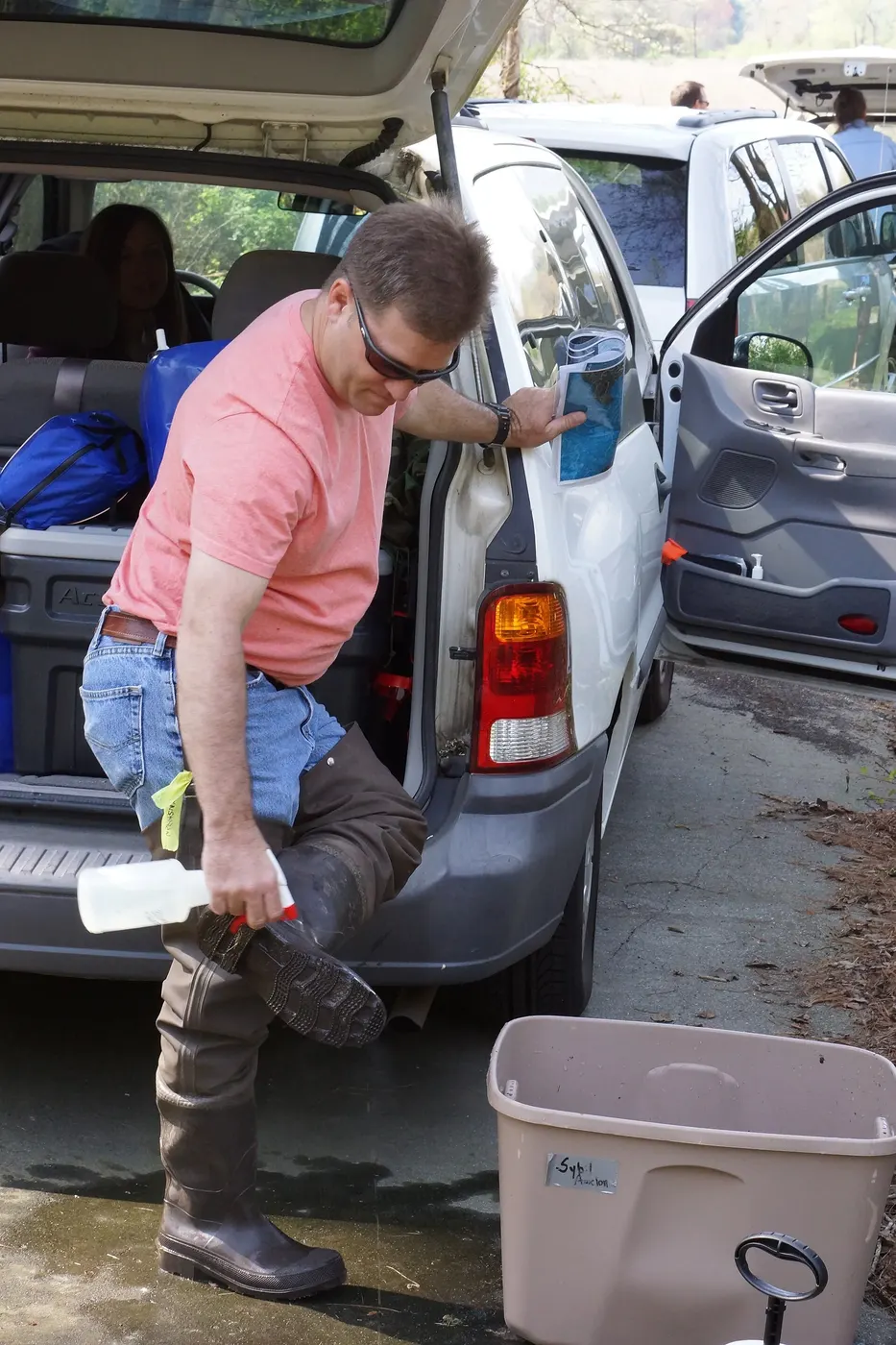
Check boot tread, laces, tent seams, stakes, ground cloths, and pockets for seeds, mud, plant fragments, or small animals. Clean gear where the official guidance directs, and dispose of removed material in the required way rather than spreading it somewhere else. Keep wet equipment contained until you can clean and dry it appropriately.
For multi-stop trips, plan enough time and space to inspect equipment before entering a new area. Pay particular attention to items used in water or mud, and to footwear that crosses habitat boundaries. If a permit or inspection station is required, include it in travel timing.
Respect protected and culturally sensitive places
Follow closures and access limits, even when cleaning appears simple. Do not collect plants, soil, seeds, or natural objects unless the authority explicitly allows it. If you discover an unfamiliar organism, avoid moving it and use the local reporting instructions.
Make cleaning part of trip care
After returning, remove dirt and dry equipment according to the maker. Inspect it again before storage. Keep a short checklist near your gear so the routine is repeatable. On another trip, check the new region’s instructions; prevention advice is specific to the organisms, regulations, and equipment involved.
Find the right local biosecurity advice
Invasive species and harmful organisms differ by region and habitat. Search the official park, agriculture, conservation, fisheries, or biosecurity authority for each destination and for the places visited immediately before it. Look for the recommended inspection, cleaning, drying, and disposal steps. A rule that applies to boats crossing lakes may not be the right method for boots or tents, so identify the activity and equipment covered by the notice.
Check whether a station, inspection certificate, drying period, or approved cleaning product is required. Some instructions are mandatory at an entry point or border; others are recommendations. Follow the current wording and contact the authority if the method is unclear or could damage your equipment. Do not substitute a generic online cleaning recipe for a local requirement.
Inspect items that can carry soil and seeds
Start with boot tread, laces, gaiters, tent floors, stakes, ground cloths, pockets, and seams. Remove visible soil and plant fragments where the official method allows it, then examine folds and textured surfaces. Seeds can cling to socks, cuffs, and gear straps. For water-based activities, check footwear, boats, paddles, and equipment according to the destination’s aquatic guidance.
Keep equipment that needs cleaning separate from clean gear during travel. A sealed bag can prevent soil from spreading through a vehicle, but it does not replace the required treatment. Mark the bag so another person knows it contains equipment awaiting cleaning. Dispose of removed material in the manner the local authority specifies rather than shaking it out along a road or trail.
Use a method safe for both the organism and the item
Follow the exact sequence and any drying or disinfection time in the official instructions. Some processes require complete drying; others specify a wash or an approved station. Do not apply heat, bleach, solvents, or pressure to a fabric or coating unless both the authority and manufacturer support it. Improper cleaning can damage gear, spread organisms, or give a false sense that an item is safe.
If you find an unfamiliar plant, animal, or material, avoid handling or moving it and use the local reporting process. Do not collect it as a souvenir. If a station or tool is broken, report the problem and ask what alternative procedure is required before entering another sensitive area.
Plan enough time between destinations
Multi-stop travel can make cleaning a schedule issue. Identify any inspection point, ferry, border, or site entry requirement before departure and include the time in your route plan. If a required drying interval cannot be completed, ask the authority for an approved alternative or postpone entry. Do not assume that a short overnight stop is enough to satisfy a treatment rule.
For a group, assign someone to check shared equipment and confirm that every person knows which items need attention. A single pair of dirty boots can reintroduce soil after the rest of the gear has been cleaned. Keep a simple list of equipment and places visited so the next authority can advise what applies.
Close the loop after the trip
Clean and dry equipment before storage according to the local guidance and maker. Inspect it again for trapped material and damage. Record the official source, method, and date so you can find current advice more quickly next time, but recheck before another destination. Biosecurity practice depends on the organism, route, regulation, and equipment involved; no single routine covers every region.
FURTHER READING
Sources and scope
These references support the general principles above. Their geography and publication dates vary; check the current local authority for your trip.
- Principle 4: Leave What You FindLeave No Trace Center for Outdoor Ethics
Use local biosecurity guidance for destination-specific cleaning and inspection requirements.
- Principle 1: Plan Ahead and PrepareLeave No Trace Center for Outdoor Ethics
Some listed distances and rules are US-oriented examples; verify local requirements.
TAKE THE NEXT STEP