Camping Basics
Build a Comfortable Camping Sleep System
Treat bag, pad, clothing, shelter, and conditions as a system; comfort and safety vary by person and conditions.
On this page
Treat the sleep setup as a system
Comfort outdoors depends on the combined shelter, sleeping bag or quilt, pad, clothing, ground, weather, and individual needs. No single item guarantees a warm night. A warm-rated bag can still feel cold on an under-insulated pad or in a damp, drafty setup. Start with the expected low temperature, wind, precipitation, campsite exposure, and the needs of everyone in the group.
Read the manufacturer’s specifications and care instructions for each item. Sleeping bags and pads use different labels and measurement methods. Compare products within the same system where possible, and ask a qualified retailer or outdoor instructor if the conditions exceed your experience.
Choose a pad and shelter for the conditions
A pad adds cushioning and reduces heat loss to the ground. Its insulation rating, width, thickness, and material affect performance and comfort. A tent or other shelter can reduce wind and precipitation, but condensation, ventilation, and site choice still matter. Follow the site’s rules and practice setup before departure.
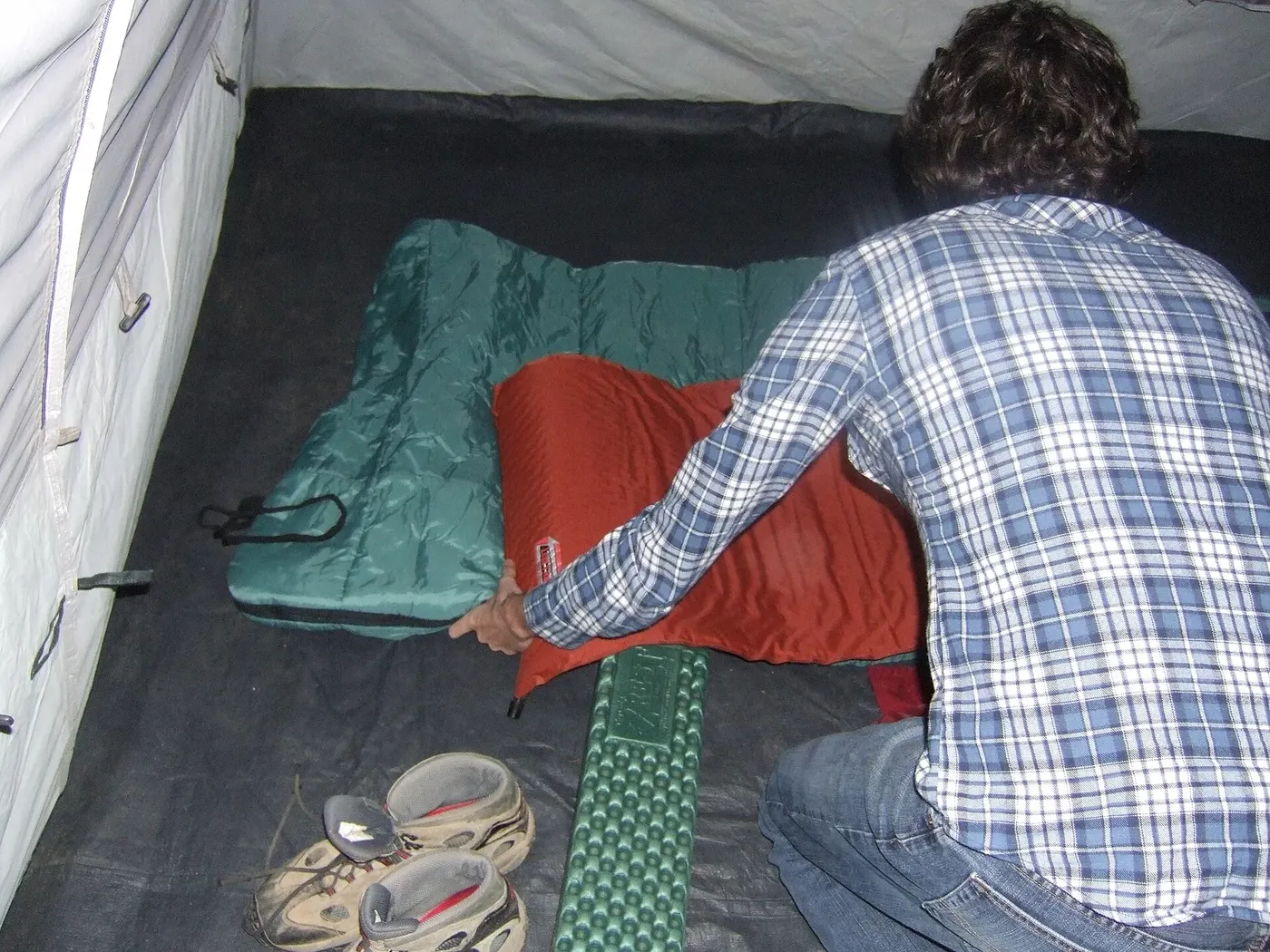
Try the complete sleep system at home or in a low-consequence setting. Lie on the pad for long enough to assess comfort, test the bag closure and fit, and check whether clothing interferes with movement. A liner or extra layer can change warmth but should not be treated as a substitute for equipment suitable to the forecast.
Manage moisture and personal comfort
Keep sleep clothing dry and store it separately from wet layers. Follow manufacturer instructions for ventilation, moisture management, and cleaning. Avoid wearing damp clothing into the sleep system when you can change safely. Personal warmth varies, and fatigue, nutrition, health, and conditions may affect comfort.
Plan for a change in conditions
Check the current forecast and site conditions. If the expected low, wind, precipitation, or exposure is beyond the gear and experience available, choose a developed alternative or postpone. Carry a backup layer appropriate to the trip and know how the group will respond if someone becomes uncomfortably cold. Afterward, note what worked, dry the equipment, and adjust the system before the next outing.
Treat the bag, pad, clothing, and shelter as one setup
The sleep system works as a combination, not as a single temperature label. A bag or quilt supplies a cover, while the pad provides cushioning and helps limit heat loss to the ground. Shelter reduces exposure to wind and rain within its design limits. Dry clothing and the sleeping surface affect comfort too. A gap in any part of the setup can matter, so compare all components with the expected site and the group’s experience.
Read the current instructions for each item. Products differ in insulation, construction, fit, care, and the way their ratings are presented. A bag that compresses heavily under body weight may provide less insulation beneath you, which is one reason the pad is important. Do not assume that placing a second bag under the first will solve a pad or shelter problem.
Choose a site before choosing a forecast number
Check whether overnight camping is permitted and whether the designated site is exposed, sheltered, high, wet, or close to an exit. Conditions at a campsite may differ from a nearby town forecast. Look for the appropriate local weather service and land-manager updates, and consider how wind, precipitation, elevation, and cloud cover may change the experience. Ask the authority when an alert or access notice is unclear.
For a first overnight, a developed or lower-consequence site with an easy return route can make it easier to learn how the equipment performs. That does not remove weather risk or guarantee warmth. It gives the group more options to stop, seek a staffed facility, or leave if the sleep system is unsuitable.
Practice packing and sleeping in the system
At home, confirm that the pad fits the tent and the sleeping bag or quilt closes and adjusts as expected. Learn how to inflate or assemble the pad and how to repair it only according to the maker’s guidance. Practice sleeping in the clothing you might use, but do not interpret one indoor test as proof that the setup will work in colder, windier, or wetter conditions.
Protect dry sleep clothing and insulation from rain and damp tent fabric. Make a simple separation plan for wet items and keep any light, medication, or essential layer accessible. If the group shares a shelter or sleeping space, confirm that everyone has room and can adjust ventilation without disturbing another person’s gear.
Plan for personal comfort without overconfidence
People experience temperature differently. Sleep habits, body shape, fatigue, clothing, nutrition, and individual needs can affect comfort, so avoid promising that a product rating will feel the same for everyone. If someone has a health condition that affects temperature regulation, seek qualified advice and choose a conservative, supported trip. Keep a warmer layer and a clear exit option when the forecast is uncertain.
If the system seems inadequate during the night, address the conditions early: add an appropriate dry layer, improve the shelter setup within its design, or move to a safer place if that is possible. Do not wait for severe discomfort to make a decision. If anyone becomes ill or is unable to warm up, follow local emergency advice.
FURTHER READING
Sources and scope
These references support the general principles above. Their geography and publication dates vary; check the current local authority for your trip.
- Camping for BeginnersREI Expert Advice
Retailer advice; products and techniques are examples, not endorsements.
- Backpacking Tips for Beginners: Getting StartedREI Expert Advice
Retailer content and examples; no purchase requirement or product endorsement is intended.
- Sleeping Pad Buying Guide: Types, R-Value & TipsREI Expert Advice · 2025-04-22
Retailer guide and test data; explain the limits of comparisons and do not promise personal comfort from a rating.
- Sleeping Bag Temperature Ratings GuideREI Expert Advice
Retailer explanation; consult the product's current test standard and consider the whole sleep system.
TAKE THE NEXT STEP